Confessions of a Recent College Grad in the 21st Century
Welcome to my blog! Here, I will share my experiences with life directly outside of college. I will also offer resources and tips for those who are searching for the perfect career, getting a good start on their career, or attaining a simple job. I hope you will find this blog helpful. Please share with your friends on Facebook and Twitter
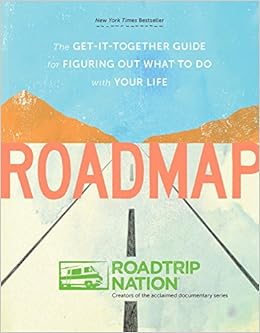
Roadmap: The
Get-it-Together Guide for Figuring out What to Do With Your Life by Roadtrip
Nation is an easy read that is helpful for those who are unsure of where to go
in life. When I first pulled the book from a shelf at a Barnes & Noble
bookstore, the grainy texture of the book cover made me doubt the content in
the book. I figured it would be a nice book to display on a coffee table, but as
I read through the book I realized there was more to it than I initially
thought.
Not only is the book an easy read, but it is
interactive too. For example, the authors ask “questions about why-starting
with, where are you headed?” and the authors give you room to answer. For example,
“The voices around me are saying, ‘I should be a ___________________________.’”
The book’s vibrant colors, supportive diagrams, and attractive pictures also
add to the enjoyable reading experience.
The
authors use quotes by notable people, such as Gregory Carroll, CEO of the
American Jazz Museum, Tony Hale, actor (and Buster Bluth on Arrested
Development), Jim Koch, founder and brewmaster of Samuel Adams, and many
others, who offer helpful advice on your career and your life. The authors even
give snapshots of other notable people talking about how they found the job
they love, how they got there, what they had to overcome, etc. to provide
inspiration for readers.
You
can find the interviews these notable people gave on the Roadtrip Nation website. With the
purchase of this book you get a free limited membership to the Roadtrip Nation
Interview Archive were you can watch thousands of videos. Roadtrip Nation are
also the creators of the acclaimed documentary series on PBS. Check your local
listings.
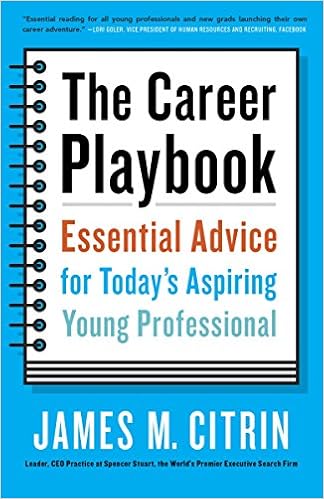
I will be reviewing The Career Playbook by
James M. Citrin. I bought the Kindle edition, which is around $7.47. You can uy
the paperback version from Amazon for $7.86. Barnes & Noble is selling it
for 7.86 too. It is also available as an audible book, for those of who don’t
like to read, and they are selling it for $14.95.
The book contains 258 pages and is a
quick and easy read. It’s a nice little
book providing enough practical information without getting too overwhelming. This book provides essential advice for those
of us who are transitioning from academia to the professional workforce.
Although much of the advice presented in this book is pretty much common sense,
he does provide some helpful tidbits of information that seem useful.
At the start of the book, Citrin describes
the six phases of your career, which I found to be the most interesting part of
the book. He gives examples and tips for writing a resume and a cover letter.
Also, there is a whole chapter devoted to how to prepare for an interview. I
find it hard to develop questions to ask employers when they ask me if I have
any questions and the author provides example questions to ask and how to
gather information and ideas for these questions.
Not
only does he provide tips and helpful information to attain a job, but how to
further develop your career as you move along. I would recommend this book to
anyone who is a recent graduated from college and is conducting their job
search.
Next,
I will provide a review for The Get it
Together Guide to Figuring out What to do with Your Life, which I will post
sometime next week. Please subscribe and share!
Linkedin
is a social media network for business professionals and companies. It’s a
fantastic way to gain connections, market yourself to potential employers, and
search for jobs. Furthermore, it’s one of the many ways employers can find you
online.
I havea friend who was interviewingto hire an IT programmer for her company. One of the
initial leading candidates for the position didn’t make the cut. One reason was
because he didn’t have a Linkedin profile. “He was an IT guy,” she told me. “You
would think he would have a Linkedin profile!” Therefore, I consider having a
Linkedin profile to be crucial in your job or internship search. If you do not
have a profile on Linkedin, I would suggest you
should create one.
Here
are 8 ways to boost your profile:
1. Use a Professional Photo as your
Profile Pic. According
to Linkedin, providing a photo makes your profile 7 times more likely to be
found in searches. Profiles without photos are likely to be perceived as
incomplete or inactive and are less likely to be viewed. Avoid photos with
pets, kids, significant others, and anything that can be viewed as
inappropriate. That lovely Facebook photo of you and your sister at her wedding,
doesn’t work.
Also,
be sure you are in business attire when you take the photo. If you want your
photo to be exceptional and professional as possible, go to a professional
photographer. However, if you are on a budget, grab a friend with a nice camera
or a camera phone with excellent quality. Have him or her take the photo of you
in a professional background. Pick a background that isn’t too distracting. A
room with a red or white wall with good lighting that doesn’t reveal your
shadow would be the best place.
2. Create a Noteworthy Headline and
Include your Industry and Location. You have 120 characters to inform
potential employers what you do. Don’t just use your job title, include your areas
of expertise for which you would like to be known and found in searches. You
may also want to include areas of interests and locations you are interested in
working. Using brief, informative, and noteworthy keywords will help employers
find you and lead to more profile views. For example, my headline is “Video
Production Intern at [Company]. Interested in Multimedia, Journalism, Writing,
Blogging in Big City Areas.”
Other
examples: “Experienced Transportation Executive
at [Company] in New York”; “Web Designer and Information Architect at [Company]
in Los Angeles”. If you don’t have a job currently and you’re interested in
going into the Film and Television industry in Los Angeles, you may write:
“Recent College Grad Seeking Entry-Level Jobs. Interested in Film and
Television in Los Angeles.”
3. Have a Killer Summary. Think of your
Linkedin profile summary as your digitalized elevator pitch. This is the chance
for you to describe who you are, what you do, what you have done, what you are
passionate about, and what makes you unique. People are viewing your profile
because they are interested in learning about you, so be sure to distinguish
yourself from others. Also, your summery isn’t your professional résumé, so
make it sound personal and conversational. Tell stories and paint a picture of
yourself, but remember to keep it professional. As always, be sure to proofread
your summary before posting.
For
an elaborate example, here is my summary: “I am a member of the class of 2015
at [College/University] with a Bachelor of Arts degree in Communication Studies
and I am interested in pursuing a career in Multimedia Journalism and Writing,
but my dream job is to be a travel writer. I absolutely love to travel abroad
and get giddy whenever I prepare to go on a trip. During my time at [College/University],
I was involved in the student newspaper, theatre, and was a brother of a service fraternity, Alpha Phi Omega. I also
took an intensive course on writing film reviews and a three-day screenwriting
workshop under the instruction of Joe Boucher, a producer of The Simpsons and
King of the Hill.”
4. Add your Current Position and Previous
Work History.
According to Linkedin, having your two most recent positions makes your profile
12 times more likely to be found. Be sure to leave a description with your
current position and at least two or more previous positions. Also, add any
corporate and volunteer positions that would be of interest to job recruiters.
Since
it’s not your resume, you shouldn’t go overboard with your previous job
experiences. A simple brief summary and some top accomplishments should be
fine. That job you did as a rabbit whisperer won’t cut it. However, you could
add that to your summary as an interesting fact. As a recent grad, it is
acceptable tolist jobs you had while in high
school and in college, as well as internships and fellowships.
5. Add Skills and Expertise. The skills and
expertise section of your Linkedin profile gives you an opportunity to showcase
the specific and detailed areas of your expertise. You should avoid being too
vague or general, but rather list specialties. Adding skills and expertise also
gives your connections the ability to endorse you in those skills.
You
should list at least 5 skills, minimum. The average skills a college grad
attains that you can add to your skills if you haven’t already: Microsoft
Office; Social Media; Facebook; Twitter; YouTube; Teamwork; Research; Public
Speaking; Event Planning.
6. Include your Education. Don’t forget to
add your education details in your profile. Add higher education school(s) you
attended, degrees received (including minors and concentration), awards (can
include making the Dean’s List), notable clubs and organizations (ex. Alpha Phi
Omega, Chamber Chorale, Debate Team, Quiz Bowl, Student Activities Board, Young
Republicans/Democrats).
Also,
if you’ve studied abroad for a semester or more, you should add the university
you attended, which country, how long you were there, relevant courses, and any
clubs and organization in which you were involved. One of the many benefits of
adding the school(s) you attended is that it allows you to connect with fellow
classmates and alumni to find you and connect.
If
you didn’t finish your degree, you should still include information about your
attendance. If you didn’t attend college, it is better to list the high school
you attended than having no education details at all. Not adding your education
details will leave your profile incomplete and raise unnecessary
questions.
7. Provide your Contact Information. If you wish to be
contacted by job recruiters or those who want to help you succeed, you should
add your contact information. At a minimum, to protect your privacy, only give
your email and phone number. Be sure it’s an appropriate email address that you
check regularly and that the phone number you provide is associated to a phone
you use regularly.
8. Get Connected. Linkedin requires
that you have at least 50 connections. This can be easily accomplished by browsing
connections. Go to your Linkedin homepage. Then, hover your cursor over the
“Connections” tab between “Profile” and “Jobs” on the bar near the top of the
page. There will be a pull-down menu, click on either “Add Connections” or
“Find Alumni.” In “Add Connections” you can upload contacts from Gmail,
Outlook, Hotmail, etc. by logging in to your personal email and see who has a
Linkedin profile. “Finding Alumni” will provide you separate lists of students
and alumni, notables, and recommendations from the school(s) you attended. One
piece of often-ignored advice is to write a simple personal message when you
send out invitations to connect. There
you go, eighttips on how to attain an
all-star Linkedin profile! A complete and compelling profile helps you stay
connected and broadens your personal brand. Regularly update your profile and
keep it fresh. Imagine your profile as another Facebook profile. You should
give your Linkedin profile as much attention as you give to Facebook if you
want to maintain an all-star profile and a good start to your career. And don’t
forget to proofread!
If
you’ve studied in the humanities or have a liberal arts degree, like me, then
this post is for you!
If
you majored in degrees such as history, English, political science, anthropology,
music, geography, art history, or like me, communication studies, how can you
take a degree and obtain a job in this competitive job market? This question
has become increasingly more difficult to answer when liberal arts graduates are
becoming unemployed, underemployed, or less well compensated than our
competitors who majored in computer science, engineering, and business.
If
you couple your liberal arts education with the following tips, you will be
well on your way to success. I also encourage you to visit the page previously
mentioned. It has valuable resources and information you can use.
Here
is some concrete advice for liberal arts graduates:
1. Know Your Skills and What You Want to
Do.
Be sure you can communicate what strengths you have and have an idea of what
you want to do. Be ready to connect the strengths you acquired in school to a
skill that employers will value. For example, if you enjoyed studying complex
and intricate macroeconomic issues, consider working in market research or
product development. I know many of you don’t exactly know what you want to do
yet and I will address this in a later post. To get you started, I would
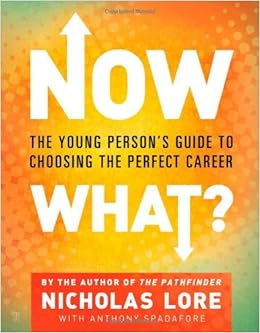
recommend checking out Now What?:
The Young Person’s Guide to Choosing the Perfect Career by Nicholas Lore
and Roadmap:
The Get-It-Together Guide for Figuring Out What to Do with Your Life by Roadtrip
Nation, Brian McAllister, Mike Marriner, and Nathan Gebhard. (I plan to produce
two videos reviewing both books respectively once I’m finished reading both of
them).
2.Become
Skilled in Tomorrow’s Disciplines. According to Alec Ross, Hilary Clinton’s
senior advisor, you should “commit to gaining a foothold in the fields that
will propel tomorrow’s economy,” as well as big data, analytics, genomics,
cyber, and robotics. Step outside your comfort zone and pursue courses outside
a traditional liberal arts focus. When interviewing potential employees, Alec
states, “I like it when a comp. lit. major tells me that he took an intro to
programming class because both comp. lit. and programming are rooted in
‘language’ and its structures.” If you add work in tech and engineering
disciplines with your humanities studies, you’ll find yourself on the same
level with graduates from more professional programs. And if you do this while
taking advantage of your broad liberal arts education, you may even be ahead of
the game. Currently, I’m taking a free programming class on Coursera.org taught by a programming professor from
the University of Michigan. If a comm. studies major can do it, I have no doubt
you can too! You may want to try taking free classes on Coursera.org or take
classes at your local community college. Even go back to school and obtain a
minor or concentration in tech and engineering disciplines if you have the
financial resources.
3. Meet with Career Services and Alumni
Relations. Odds
are, your career services and alumni relations offices are tirelessly working
to help connect students with internships and entry-level jobs. Enroll in
programs aimed at helping recent grads and alumni succeed in their job search.
Chat with the career center about the types of jobs and companies that interest
you, and then follow any leads they provide you. College career services and
alumni relations offices are doing the best they can to support your success-
both because they actually do care about you and as a matter of their own
survival. Your school’s career services office needs examples they can produce
when trying to talk about their success rate. Why not make yourself one of
those success stories?
4. Be Creative about Getting Your Foot in
the Door. Networking
is a crucial key to your success, but it is particularly important for liberal
arts students. This is because liberal arts students graduate with limited credentials
that employers can rely on when making hiring decisions. Whenever a position at
big companies such as Ebay, NBC, The
Huffington Post, or NPR is open that’s appropriate for a liberal arts
major, these companies receive thousands of applications. For this reason, it
is important to take advantage of any connections you have to find someone who
can introduce you to someone else at the company. According to Laura Chambers
who runs Ebay’s program for new employees, “Finding a way to leverage any
connections will ensure you get noticed among the crowd.” This is where
Linkedin should come as a useful resource. The next blog I’ll post will be
solely on Linkedin and how to use it to your advantage.
5. Think Globally. Consider working
outside the traditional business hubs of the United States or Western Europe.
According to Alec Ross, “Today’s frontier economies are tomorrow’s developing
economies and today’s developing economies are tomorrow’s developed economies.” Try to position yourself for the long term if
you’re willing to take a risk in a frontier economy while your pals are having
a blast in New York City, San Francisco, and London.
6. Consider Sales. If you’re
persuasive and enjoy surrounding yourself with people, your liberal arts
education can help you become a strong performer in sales. Jay Walker, the
founder of Priceline.com states, “Sales is the best job in the world if you
like people, can communicate and synthesize well, and are skilled at solving
other people’s problems. The fact is nothing happens in the world without
sales. Give me any field, and I’ll show you how, without sales, there is no
forward momentum. Even scientists have to sell to get their funding. There is
never a recession in sales.”
These
tips were borrowed from The Career Playbook:
Essential Advice for Today’s Aspiring Young Professionals by James M.
Citrin where you can find a plethora of more helpful tips and tricks to landing
a job. I plan to produce a video reviewing this useful book.
Please
leave any other tips or questions you may have in the comments section, so
other readers can be informed. Plus, please share with your friends on Facebook
and Twitter!
It’s
becoming more common for college grads to take advantage of the few years of
freedom post-graduation, opting to consider other paths before diving into a
full-time career. If you’re a recent graduate hesitant to jump into the
nine-to-five, consider doing something else with your time, such as interning,
volunteering, or traveling. However, whatever you choose to do, make sure it
would be something of value to add to your résumé.
1. Be an Adventure
Guide. Are
you an adventurous individual? Whether you enjoy whitewater rafting, rock
climbing, kayaking, paragliding, sky diving, bungee jumping- turn that passion
into a part-time job. Many adventure companies are looking for young people to
hire. There are opportunities both within the United States and internationally,
as many companies are becoming increasingly eager to hire. Search the Internet
for adventure sites that are hiring. Click here to a link to help
you get started if you are seriously thinking about going in this direction
2. Become a Nanny. Becoming a nanny
would be an excellent opportunity for those who enjoy working with children. If
you decide to be a nanny, you can often get free room and board, which is an
excellent way to save money. It also has its perks, such as traveling with the
family, a nice weekly paycheck, and the complementary use of a car. Being a
long-term nanny, such as working for the same family for a year, can also be a
great way to gain strong personal references you can provide other employers as
you start your career. Search the Internet for postings, such as on Indeed or Linkedin. My best recommendations would be going
to Care.com and GreatAupair.com, which both offer
free searches.
3. Become a
Research Assistant. If
you live close to a college, being a research assistant could be a good option,
as many universities invest greatly into research. Not all research is
exclusive to the sciences, in fact, research goes into other fields too, such
as journalism, international relations, business, economics, and art history.
There are many opportunities for recent graduates. Ask your previous professors
and other faculty and staff you may have developeda relationship with while at
school if there are any potential research projects occurring at the university
where they can use your assistance.
4. Participate in
a Gap Year Program. If
you’re interested in investing your time towards a good career, consider a gap
year program, such as the Peace Corps, AmeriCorps, or City Year. Participating in
these programs not only provide you with life lessons, but can be added benefit
to your résumé and provide you with intereresting material to discuss at a job
interview. Additionally, these programs can connect you with other alumni who
may be valuable future references during your upcoming job searches.
5. Find an
Internship. Although
many internships require that interns be enrolled at a credited university,
there are some internships that don’t require it. Many of these types of
internships are paid, offering monetary compensation instead of college credit.
If you’re a recent graduate, there’s a chance you will find an internship that
would be a great fit for you, especially if you are fully available. It would
be sensible to search for internships in career areas that interest you most
and where you can thrive on your strengths and talents. Also, for those who are
uncertain or their career path, you can use an internship to discover if it’s
the perfect career track for them or not. Not only do internships offer
valuable work experience, but they can be added benefit to your résumé and
provide you with connections to potential employers.
6. Invest in Your
Passion. What
is your passion? Do you love yoga or pilates? Do you enjoy theater or the fine
arts? Do you thrive on the ski slopes or the rock climbing wall? If you have a
passion that you can transform into a part-time job, consider investing your
time in a training course to get certified, or even teach it yourself. For
example, you can take a yoga instructor training course, become a certified ski
instructor, become a certified belay at a rock climbing facility, or become an
art teacher at your local community center. This will not only let you have fun
at work, but you can gain experience and skills to add to your résumé and it
can also turn your hobby into a job you can use as a safety net. Even if you
can’t transform your passion into a part-time job, there may be volunteer work.
For example, if you love theater, you can volunteer as a stage hand at your
local community theater or if you enjoy reading books, volunteer to read to
children at your local public library. This brings me to my next point…
7. Volunteer in
the U.S.Of
course you won’t obtain a paycheck by volunteering, but it’s a great way to
gain experiences and skills to add to your résumé. If you don’t know which
direction to go when deciding on a career, volunteering can provide you a way
to explore various career fields and discover your talents and interests. By
volunteering you are making positive changes to society while also building
connections with fellow volunteers, co-workers, supervisors, and organizations
that might be important for your future work, such as providing a reference.
You can find day-to-day opportunities in your hometown, or ask a non-profit
organization if they need an extra hand. If you are searching for volunteering
opportunities that fit your interests, I would suggest setting up an account at
VolunteerMatch.org. This site is
completely free and matches your interests with available volunteer
opportunities in your area. That was how I found an opportunity to be an adult
tutor at Blue Ridge Literacy.
8. Take a
Continuing-Education Class. Whether you’re interested in pursuing a
field other than what you majored in, or want to further develop your skills
useful in the workforce, consider taking continuing-education courses at a
community college or at an adult-learning center in your area. If you don’t
have access to such places near you, another option is Coursera.org. The site offers free online courses,
taught by professors from 122 accredited universities around the world with
varying topics from Intro to Finance to Social Psychology to Modern &
Contemporary American Poetry. For example, if you were an English major but
want to pursue a different field such as computer programming or graphic design,
taking classes would give you a solid foundation to begin looking for
entry-level jobs.
9. Teach English
Abroad.
Many American attain jobs abroad every year. English is increasingly becoming
the dominant language in international trade to export countries, especially
Asia and Latin America, who are eager to have
their citizens learn the language. It would be helpful to have a working
knowledge of your host country’s language. Popular options include programs
through international embassies, such as the JET program or InterExchange.org. You may also
want to check for jobs at international schools and service organizations.
10. Work Seasonal
Jobs.
If you want to have varied positions to add to your resume, pursuing a few
seasonal jobs for a year is fun and you can gain experiences and skills to add
to your résumé- all while enjoying yourself. Jobs can include, but are not
limited to, positions at ski resorts, cruise ships, beaches, country clubs,
water or amusement parks, etc. If you plan wisely, you can find employment for
a full year in this year.
If
you want to travel and still earn a paycheck, consider working abroad by
pursuing a “working holiday” visa. Particular countries, including Australia,
Canada, Chile, France, Japan, New Zealand, and many more, offer “working
holiday” visas in which U.S. citizens are permitted to stay in the country and
maintain temporary jobs. Try visiting the desired country’s embassy or
immigration website for information on how to obtain a visa and for any
policies and regulations. For example, if you wanted to work in New Zealand, I
would suggest you go here. For other
countries, try Google searching your desired country + “working holiday visa.”
12. Travel
Recreationally. The
best time to travel is after college, when you are free of obligations to a
job. If you have the opportunity to travel, you should do so, as it broadens
your perspective of the world and is a valuable life experience. Make the most
of your travel time, take lots of pics to post on Tumblr, blog about your
experience on Blogger, create a Prezi of your trip, or
construct a presentation on SlideShare.
If
money is an issue, there are plenty of travel sites that offer cheap fares for
young travelers, you’ll have to do some digging to find the best prices that
will fit your budget. Consider exploring these sites: EF College Break, Budget Travel, Travel Channel, Rick Steves, and Time. If you are
really serious about traveling, I would suggest to give this book a quick read,
How to Travel the World on $50 a Day
by Matt Kepnes.
13. Work at Your
College. If
you decide to continue living close to your alma mater, consider pursuing a
part-time job. Many job opportunities can be found on college campuses. For
example, you could work in the department were you majored or you could work as
a teaching assistant. These types of jobs can be particularly convenient if you
still live in your college town, and can also lead to further opportunities,
such as funding for post-graduate courses or a degree. Many universities even
let their employees take classes for free.
14. Try Organic
Farming. The World Wide Opportunities in
Organic Farming
program- also known as WOOF- is a program that helps individuals find
opportunities on organic farms across the planet. For a small fee, participants
have an extensive database of opportunities at their disposal in the country of
their choice. The duration of your experience depends on where and when you
work as the guidelines of the agreement are between the farmer and the
volunteer, Most situations are a few months long and include room and
board.
There
are several positives on being uncertain about your future and not knowing what
you want to do with your life. First of all, it’s alright if you don’t know
what you want in life. We are at a young age where we have enough time to
explore what we want to do and to figure out where to go from here. There’s no
rush.
Second,
we wake up every day with the possibility that today is the day we are going to
figure it out. That does not mean we have to figure everything out. Discovering clue after clue each day is the reason
why it’s great to wake up every day and following a hunch.
Third,
we still have a sense of wonder about our lives. It’s a great time to explore
interests, discover new talents, and create and pursue goals.
Fourth,
we tend to be open to things a lot more. It’s great to meet new people, go to
events and gatherings to which we would never go, read books we may not
normally read. We’re looking for any kind of help and guidance, and there’s
nowhere we’re afraid to look. Personally, I’ve been utilizing this method as
much as I can; and I will be willing to share the resources and tips I’ve found
to be helpful, which is the whole purpose of this blog.
Fifth,
being confused, restless, and uncertain is better than being bored. You have a sense
of curiosity and a strong desire to figure out what you want to do and making
it reality.
Sixth,
we have the answer right at our fingertips. Yes, it’s not going to come to you
in an instant, but we have all the resources to understand what we want to do
in the world and how to attain it. With the Internet (including this blog), an
infinite number of books, and any mentors we may have, we have plenty of people
and things that are waiting to provide us with the guidance we need.
Seventh,
people always want to help. When we learn to start asking, and to start telling
people we need help, we’ll find that there are more people willing to help than
it seems. Whether it’s sharing a few pieces of advice to sharing a connection
that may help you find your dream job. I will go further on developing
connections and tips on effective networking in a later post.
Eighth,
we realize that we don’t have to attain a career that won’t fulfill all our
wants and needs. Many lucky people do find that their work provides them with
great fulfillment. However, uncertainty about what you want to do also means
you have the opportunity to learn and grow, such as developing new hobbies,
volunteering for something we are passionate about, going back to school,
starting a family, or following our interests and passions. These things can be
beneficial in regards to leading a fulfilled life.
Ninth,
there doesn’t have to be only just one
characteristic that defines us forever. Our lives are not about achieving
something and then basing our life experiences and self-identities around them.
Instead, our life is based on how we act, who we meet, what we learn, and how
we become the people we are today while we are on the journey trying to
understand what are purpose is in life.
Finally,
when we do start figuring it out, we can appreciate it a whole lot more because
of everything we went through to get there.
For
more ideas and inspiration, check out this video from John Green the author of
The Fault in Our Stars and Paper Townshere.
Next
week: Take a Leap Year: Productive Ways to spend Your First Year out of College
Please
follow and share with your friends on Facebook and Twitter. Also, I read your comments. If you have any other positives to add to this list, put it in the comment section.
 Roadmap: The
Get-it-Together Guide for Figuring out What to Do With Your Life by Roadtrip
Nation is an easy read that is helpful for those who are unsure of where to go
in life. When I first pulled the book from a shelf at a Barnes & Noble
bookstore, the grainy texture of the book cover made me doubt the content in
the book. I figured it would be a nice book to display on a coffee table, but as
I read through the book I realized there was more to it than I initially
thought.
Roadmap: The
Get-it-Together Guide for Figuring out What to Do With Your Life by Roadtrip
Nation is an easy read that is helpful for those who are unsure of where to go
in life. When I first pulled the book from a shelf at a Barnes & Noble
bookstore, the grainy texture of the book cover made me doubt the content in
the book. I figured it would be a nice book to display on a coffee table, but as
I read through the book I realized there was more to it than I initially
thought.