If
you’ve studied in the humanities or have a liberal arts degree, like me, then
this post is for you!

If
you majored in degrees such as history, English, political science, anthropology,
music, geography, art history, or like me, communication studies, how can you
take a degree and obtain a job in this competitive job market? This question
has become increasingly more difficult to answer when liberal arts graduates are
becoming unemployed, underemployed, or less well compensated than our
competitors who majored in computer science, engineering, and business.
However,
do not despair! According to liberalartspower.org:

If
you couple your liberal arts education with the following tips, you will be
well on your way to success. I also encourage you to visit the page previously
mentioned. It has valuable resources and information you can use.
Here
is some concrete advice for liberal arts graduates:
1. Know Your Skills and What You Want to
Do.
Be sure you can communicate what strengths you have and have an idea of what
you want to do. Be ready to connect the strengths you acquired in school to a
skill that employers will value. For example, if you enjoyed studying complex
and intricate macroeconomic issues, consider working in market research or
product development. I know many of you don’t exactly know what you want to do
yet and I will address this in a later post. To get you started, I would
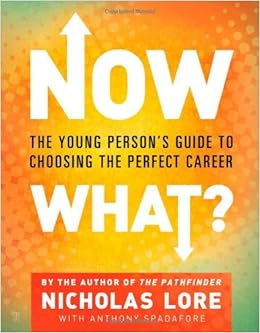
recommend checking out Now What?:
The Young Person’s Guide to Choosing the Perfect Career by Nicholas Lore
and Roadmap:
The Get-It-Together Guide for Figuring Out What to Do with Your Life by Roadtrip
Nation, Brian McAllister, Mike Marriner, and Nathan Gebhard. (I plan to produce
two videos reviewing both books respectively once I’m finished reading both of
them).

2. Become
Skilled in Tomorrow’s Disciplines. According to Alec Ross, Hilary Clinton’s
senior advisor, you should “commit to gaining a foothold in the fields that
will propel tomorrow’s economy,” as well as big data, analytics, genomics,
cyber, and robotics. Step outside your comfort zone and pursue courses outside
a traditional liberal arts focus. When interviewing potential employees, Alec
states, “I like it when a comp. lit. major tells me that he took an intro to
programming class because both comp. lit. and programming are rooted in
‘language’ and its structures.” If you add work in tech and engineering
disciplines with your humanities studies, you’ll find yourself on the same
level with graduates from more professional programs. And if you do this while
taking advantage of your broad liberal arts education, you may even be ahead of
the game. Currently, I’m taking a free programming class on Coursera.org taught by a programming professor from
the University of Michigan. If a comm. studies major can do it, I have no doubt
you can too! You may want to try taking free classes on Coursera.org or take
classes at your local community college. Even go back to school and obtain a
minor or concentration in tech and engineering disciplines if you have the
financial resources.
3. Meet with Career Services and Alumni
Relations. Odds
are, your career services and alumni relations offices are tirelessly working
to help connect students with internships and entry-level jobs. Enroll in
programs aimed at helping recent grads and alumni succeed in their job search.
Chat with the career center about the types of jobs and companies that interest
you, and then follow any leads they provide you. College career services and
alumni relations offices are doing the best they can to support your success-
both because they actually do care about you and as a matter of their own
survival. Your school’s career services office needs examples they can produce
when trying to talk about their success rate. Why not make yourself one of
those success stories?
4. Be Creative about Getting Your Foot in
the Door. Networking
is a crucial key to your success, but it is particularly important for liberal
arts students. This is because liberal arts students graduate with limited credentials
that employers can rely on when making hiring decisions. Whenever a position at
big companies such as Ebay, NBC, The
Huffington Post, or NPR is open that’s appropriate for a liberal arts
major, these companies receive thousands of applications. For this reason, it
is important to take advantage of any connections you have to find someone who
can introduce you to someone else at the company. According to Laura Chambers
who runs Ebay’s program for new employees, “Finding a way to leverage any
connections will ensure you get noticed among the crowd.” This is where
Linkedin should come as a useful resource. The next blog I’ll post will be
solely on Linkedin and how to use it to your advantage.
5. Think Globally. Consider working
outside the traditional business hubs of the United States or Western Europe.
According to Alec Ross, “Today’s frontier economies are tomorrow’s developing
economies and today’s developing economies are tomorrow’s developed economies.” Try to position yourself for the long term if
you’re willing to take a risk in a frontier economy while your pals are having
a blast in New York City, San Francisco, and London.
6. Consider Sales. If you’re
persuasive and enjoy surrounding yourself with people, your liberal arts
education can help you become a strong performer in sales. Jay Walker, the
founder of Priceline.com states, “Sales is the best job in the world if you
like people, can communicate and synthesize well, and are skilled at solving
other people’s problems. The fact is nothing happens in the world without
sales. Give me any field, and I’ll show you how, without sales, there is no
forward momentum. Even scientists have to sell to get their funding. There is
never a recession in sales.”
These
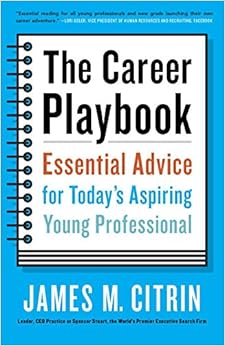
tips were borrowed from The Career Playbook:
Essential Advice for Today’s Aspiring Young Professionals by James M.
Citrin where you can find a plethora of more helpful tips and tricks to landing
a job. I plan to produce a video reviewing this useful book.
Please
leave any other tips or questions you may have in the comments section, so
other readers can be informed. Plus, please share with your friends on Facebook
and Twitter!

No comments:
Post a Comment